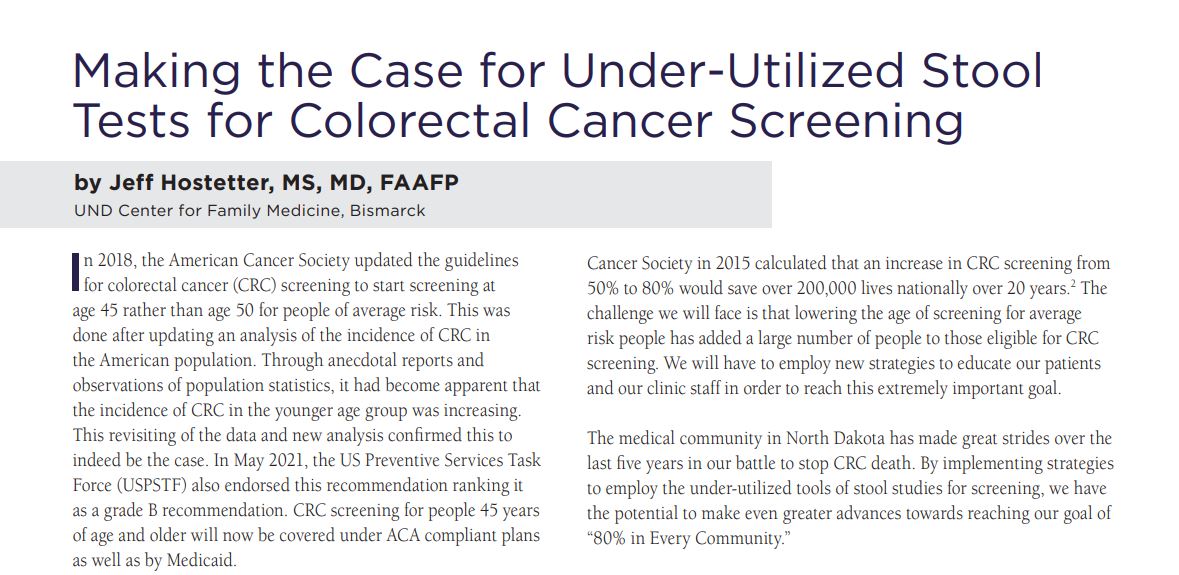
2026 #TurnNDBlue Photo Contest
In observance of Colorectal Cancer Awareness Month this March 2025, the North Dakota
Cancer Coalition is sponsoring our 9th Annual Turn ND Blue Photo Contest.
2026 #TurnNDBlue Photo Contest Read Post »

In observance of Colorectal Cancer Awareness Month this March 2025, the North Dakota
Cancer Coalition is sponsoring our 9th Annual Turn ND Blue Photo Contest.
2026 #TurnNDBlue Photo Contest Read Post »
Organized by the EHR Superusers Workgroup of the North Dakota Colorectal Cancer Roundtable. Recorded Events Using Population Health Management Tools for Quality Improvement Presenters: Jennifer Saueressig and Billie Jo Nelson, Community Healthcare Association of the Dakotas (CHAD) The population health tool Azara transforms healthcare data into actionable insights, but its effectiveness relies on accurate and reliable data.
EHR Workshop Series Read Post »
Colorectal cancer screening is one of the most effective ways to prevent and detect cancer early. This interactive map helps you find colonoscopy screening and diagnostic locations across North Dakota, including details on wait times, availability, and contact information for scheduling. Whether you’re looking for the nearest clinic or planning ahead for your screening, this
Find Colonoscopy Screening Locations in North Dakota Read Post »
North Dakota was well represented at the National Colorectal Cancer Roundtable meeting! Attendees included: Dr. Jared Marquart, chair of the NDCCRT, Unity Medical Center (Grafton); Jesse Tran, co-lead of the NDCCRT; Jill Ireland, co-lead of the NDCCRT; Kari Novak and Kristen Pastorek, Unity Medical Center (Grafton); Nikki Medalen, Jonathan Gardner and Carolyne Tufte, Quality Health
NCCRT Meeting, Fort Worth, TX | November 20-22, 2024 Read Post »
In observance of Colorectal Cancer Awareness Month this March 2024, the North Dakota Cancer Coalition is sponsoring our 8th Annual Turn ND Blue Photo Contest. We are inviting YOU to help us make aBIG, BLUE splash across North Dakota. Education and awareness are key to improving CRC screening rates. That’s why we’re asking you to help us
2024 #TurnNDBlue Photo Contest Read Post »

The NCCRT Steps Guide provides a step-by-step format for implementing evidence-based, expert-endorsed strategies to improve colorectal cancer screening rates in primary care practices. The ScreeND program, a colorectal cancer screening improvement program from Quality Health Associates of ND, has developed tools that have been utilized in rural and tribal communities in ND. Those tools are shared in this toolkit.
Colorectal Cancer Screening Improvement Toolkit Read Post »
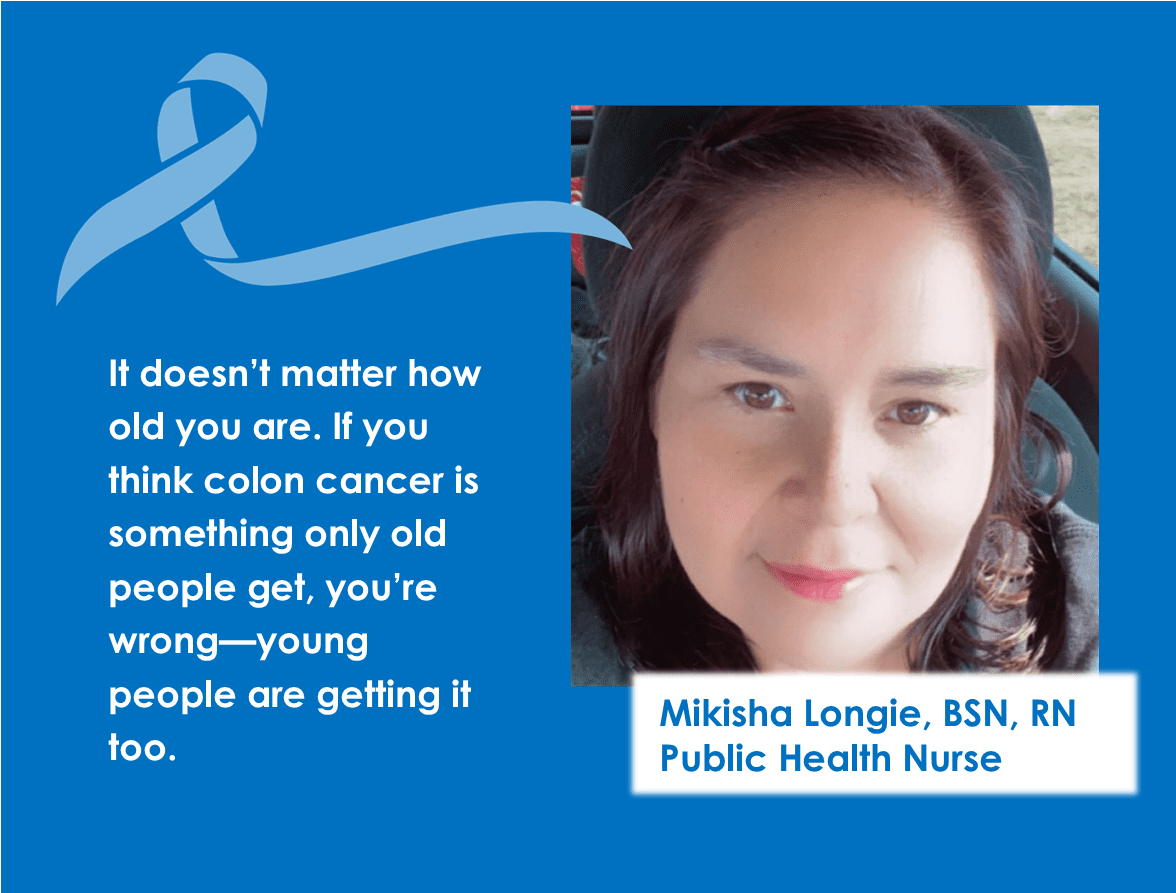
“I am too young for this.” That thought kept running through Mikisha Longie’s mind when she was diagnosed with colorectal cancer at the age of 44. Around June of 2021, Mikisha began experiencing symptoms—oddly formed/colored stool and pelvic and back pain. While these symptoms concerned her, she attributed the pain to a recent hysterectomy and
Mikisha Longie | Colon Cancer Survivor and Screening Advocate Read Post »
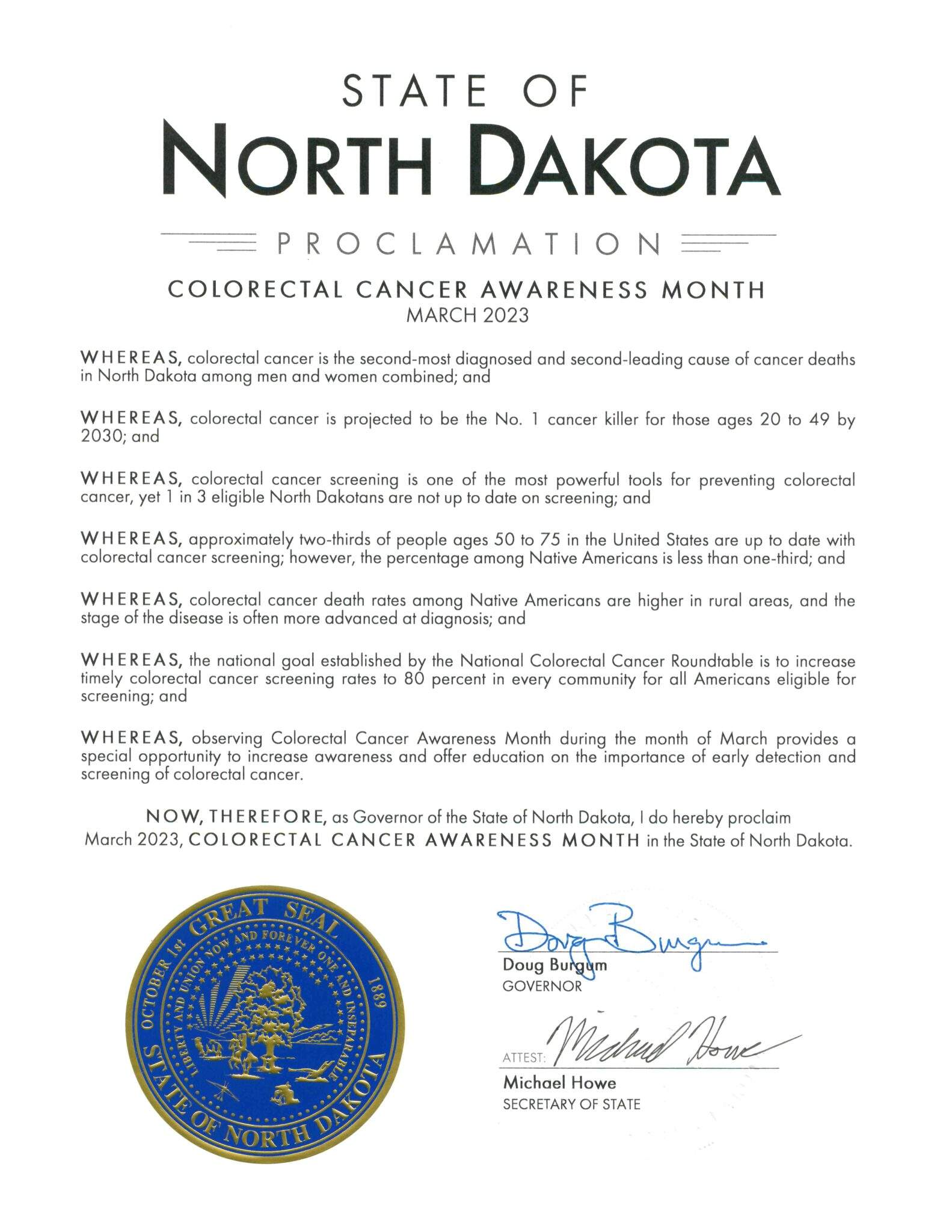
The North Dakota Cancer Coalition (NDCC), a champion for improving prevention and screening for colorectal cancer, secured a state proclamation from Governor Doug Burgum to raise awareness for colorectal cancer during March, Colorectal Cancer Awareness Month. NDCC is one of the thousands of advocates from across the United States who are raising awareness about the
Governor Burgum Declares March Colorectal Cancer Awareness Month in North Dakota Read Post »
Colorectal cancer is the second most diagnosed and second leading cause of cancer death in North Dakota for men and women combined. It is often thought of as a disease that only affects older people. But the face of colorectal cancer is changing. Over the past four decades colorectal cancer has been steadily increasing in
Dress in Blue Day and Turn ND Blue Photo Contest Launches in March Read Post »
Prepared by Jon Gardner, Data Manager, ScreeND/Quality Health Associates of North Dakota Medicare’s Calendar Year 2023 Physician Fee Schedule[1] final rule[2], published November 1, 2022, contains some positive changes around colorectal cancer screening in support of the Biden Administration’s Cancer Moonshot program.[3] One of the goals addressed by this final rule is to reduce barriers and
What’s Covered? Demystifying Cost-Sharing for Colorectal Cancer Screening Read Post »

This guide provides tools, resources, and messaging to make it easy for employers to effectively increase timely, quality colorectal cancer screening in their workforce.

Through a step-by-step format, this manual provides evidence-based, expert-endorsed strategies to improve colorectal cancer screening rates in primary care practices.

This one-page flyer may be used to remind clinicians about some of the dos and don’ts when it comes to colorectal cancer screening. This version references the starting age of 45 and includes an asterisk that explains that some health plans will not be required to follow the May 2021 USPSTF recommendation that lowered the
The Dos and Don’ts of Colorectal Cancer Screening Read Post »
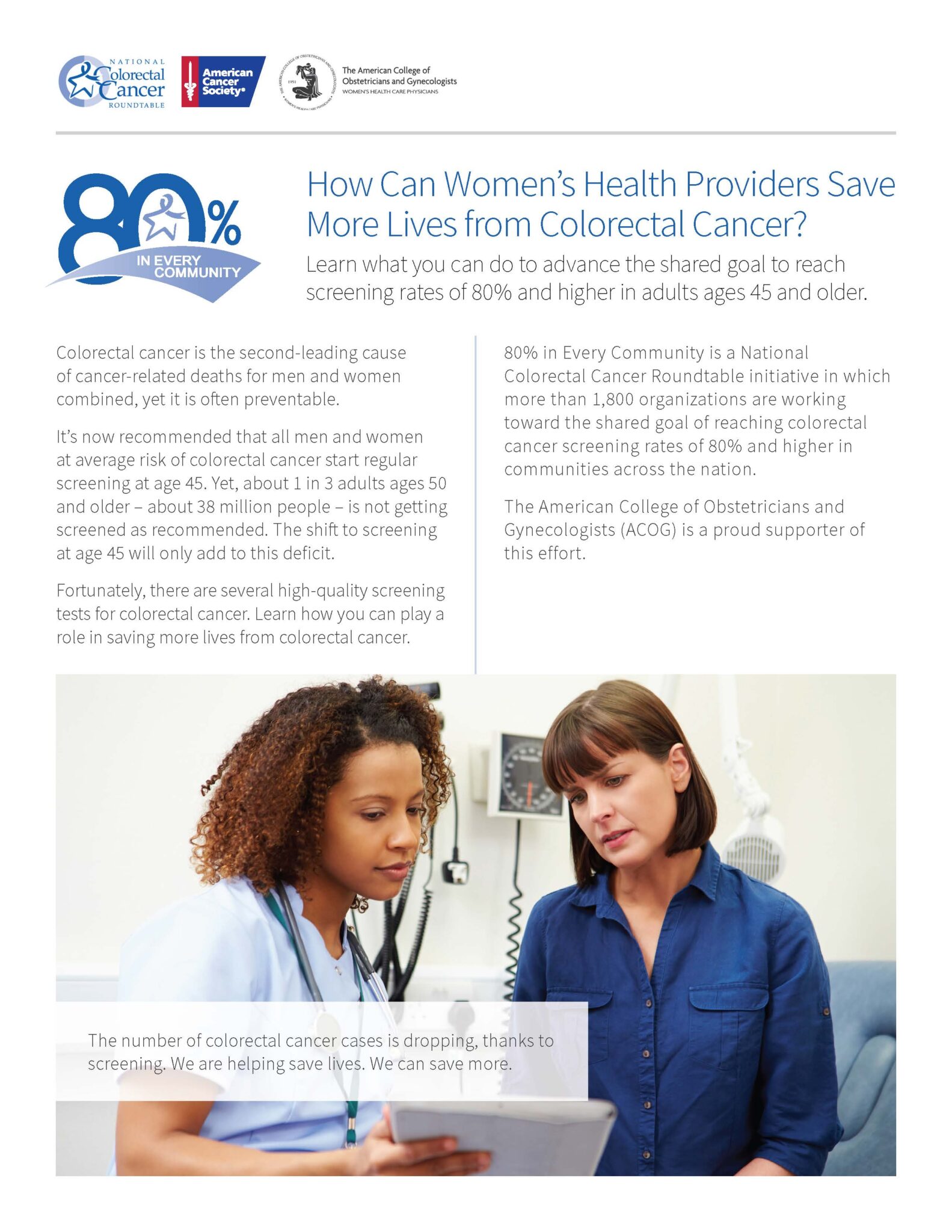
This brief shares how women’s health providers can help advance the shared goal to reach colorectal cancer screening rates of 80% and higher in adults ages 45 and older.
How Can Women’s Health Providers Save More Lives from Colorectal Cancer? Read Post »

This brief shares how survivors and families can help advance the national effort to reach colorectal cancer screening rates of 80% and higher in adults ages 45 and older.
How Can Survivors & Families Save More Lives from Colorectal Cancer? Read Post »

The 2022 Messaging Guidebook for Black & African American People: Messages to Motivate for Colorectal Cancer Screening is intended to provide you with information and tools to help you work towards closing disparity gaps by using effective, tailored cancer screening messaging to help motivate people to get screened.

The Mailed FIT Implementation Guide provides a roadmap for how health systems and other entities can design and carry out mailed fecal immunochemical test (FIT) outreach programs, including information on key partnerships and what to have in place before launching a program. The guide was produced in partnership with the National Association of Chronic Disease
Mailed FIT Implementation Guide Read Post »

CDC’s Screen for Life: National Colorectal Cancer Action Campaign informs men and women who are 45 years old or older about the importance of getting screened for colorectal cancer regularly.
Screen for Life Campaign Read Post »

The videos in this collection explain colon cancer risk factors, screening tests, treatments, and more.
Colon Cancer Videos Read Post »

Colorectal cancer is the second most common cancer among Native people, and the second leading cause of cancer death. Learn more.
End Colon Cancer in Indian Country Read Post »
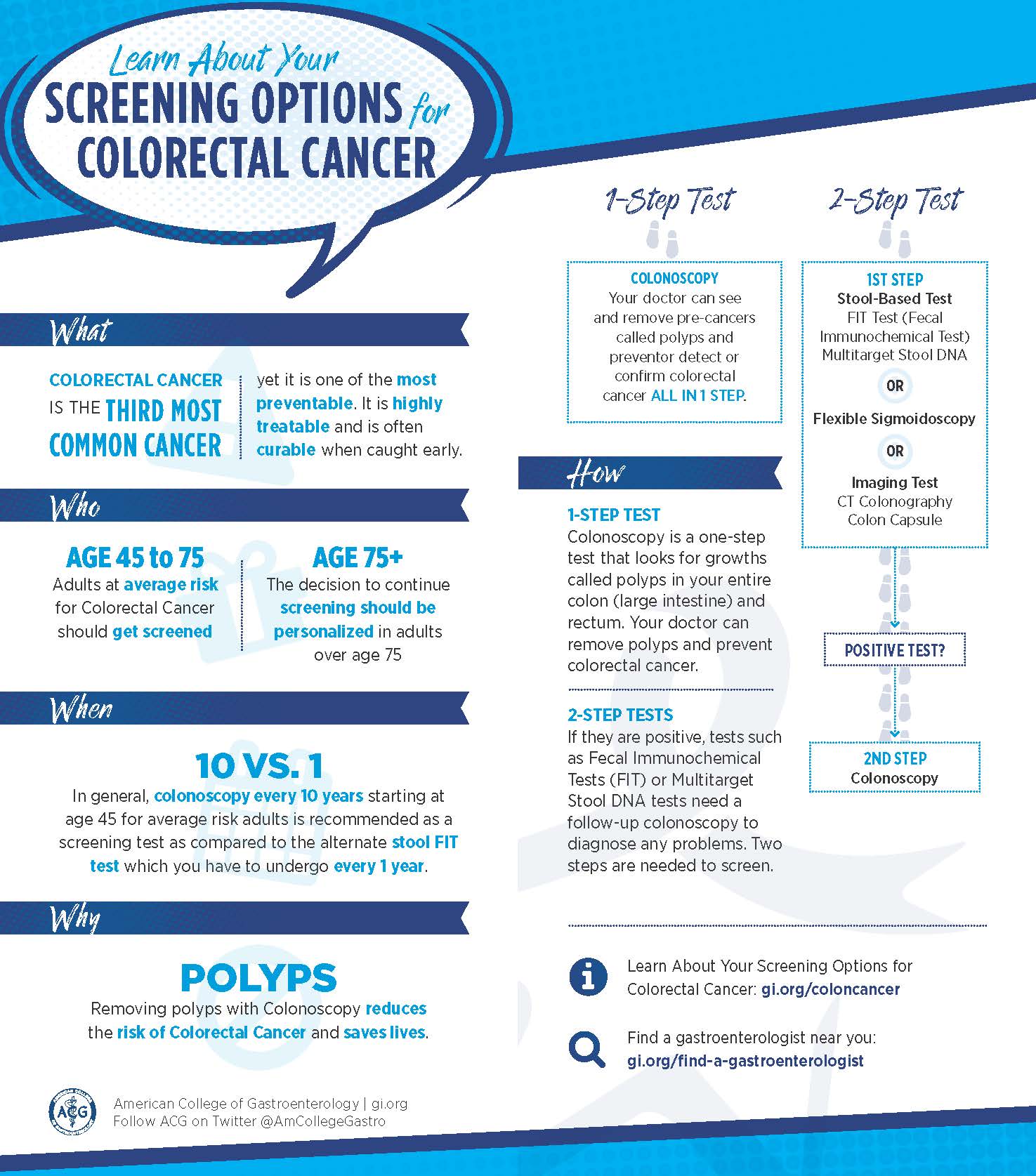
Know all of the options available for colorectal cancer screening.
Learn About Your Screening Options Read Post »
Primary care plays a central role in cancer screening. This practical toolkit helps primary care providers improve cancer screening rates in their practices and reduce related disparities, based on research and findings from the literature.
Improving Cancer Screening Rates in Your Practice and Reducing Related Disparities Read Post »

This document provides an action-oriented playbook for how NCCRT members, 80% pledged partners, and colorectal cancer screening advocates across the nation can work together to reignite our screening efforts appropriately, safely, and equally for all communities following the COVID-19 pandemic.
The ACS recommends that people at average risk of colorectal cancer start regular screening at age 45. This can be done either with a sensitive test that looks for signs of cancer in a person’s stool (a stool-based test), or with an exam that looks at the colon and rectum (a visual exam). Review the
American Cancer Society Guideline for Colorectal Cancer Screening Read Post »
80% in Every Community is an NCCRT initiative that continues the progress and commitment from 80% by 2018, and reemphasizes dedication to partnership, collective action, and the pooling of resources to reach 80% colorectal cancer screening rates nationally.
80% in Every Community Read Post »
Screening for colorectal cancer should begin at age 45. Learn more!
Colorectal Cancer Factsheet Read Post »
Guidelines from the American Cancer Society, the US Preventive Services Task Force, and others recommend Fecal Immunochemical Tests (FIT), High-Sensitivity Fecal Occult Blood Tests (HS-gFOBT) and FIT-DNA testing as options for colorectal cancer (CRC) screening in men and women at average risk for developing colorectal cancer. This document provides state of-the-science information about these tests.
Clinician’s Reference: Stool-Based Tests for Colorectal Cancer Screening Read Post »